


Food & nutrition
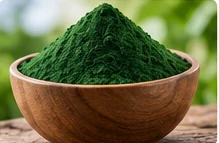
Dry spirulina supplies protein, iron, pigments and other nutrients. It can complement a varied diet, but is not a replacement for balanced meals or medical treatment. Benefits depend on dose, product quality and individual needs.

Explore the origins, biology, nutrition, cultivation and future of Spirulina — alongside next-generation food, agricultural and personal-care innovations.
Cyano brings the oldest organism to next generations.


Spirulina is the commercial name commonly used for biomass from Arthrospira, a photosynthetic cyanobacterium. Cyanobacteria have an ancient evolutionary history; that does not mean the spirulina sold today is literally the first living organism.


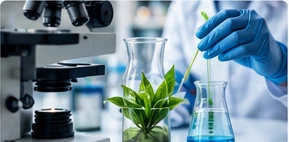
Illustrative concept artwork for education and layout; not photographs of CYANO facilities, NASA/ESA missions, or laboratory-verified results.
Cyanobacteria belong to an ancient group associated with oxygen-producing photosynthesis over geological time.
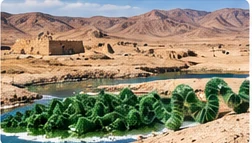
Historical records describe harvesting blue-green biomass around Lake Texcoco in Mexico and traditional dihé food around Lake Chad.
Scientific and industrial interest in Arthrospira grew, leading to modern controlled cultivation and food research.
Researchers study food, feed, pigments, agriculture, circular bioeconomy and life-support applications.
Evidence strength differs across human nutrition, animal feed and crop biostimulation. We distinguish nutritional composition, emerging research and approved product claims.


Illustrative concept artwork for education and layout; not photographs of CYANO facilities, NASA/ESA missions, or laboratory-verified results.
Dry spirulina supplies protein, iron, pigments and other nutrients. It can complement a varied diet, but is not a replacement for balanced meals or medical treatment. Benefits depend on dose, product quality and individual needs.
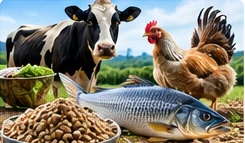
Studied as a feed ingredient for fish, poultry and livestock. Inclusion rates and outcomes depend on species, ration design and feed regulations; claims require species-specific evidence.
Spirulina extracts and biomass are investigated for plant growth and stress responses. Results vary with extraction, crop, application method and field conditions.
“Superfood” is a popular marketing term, not a universal scientific certification. Spirulina's interest comes from its high protein concentration on a dry-weight basis, pigment compounds such as phycocyanin, and potential for efficient controlled production. Its nutritional value does not imply that it prevents or cures diseases.
Spirulina has been investigated in space-life-support concepts for food biomass and photosynthetic oxygen generation. ESA's MELiSSA programme has studied cyanobacteria including Limnospira (formerly Arthrospira) for regenerative systems. This does not mean all astronauts routinely consume spirulina or that it is a mandatory NASA diet item.


Illustrative concept artwork for education and layout; not photographs of CYANO facilities, NASA/ESA missions, or laboratory-verified results.
A practical overview for learners and prospective growers. Commercial food production requires validated procedures, trained personnel, compliant facilities and laboratory quality assurance.


Illustrative concept artwork for education and layout; not photographs of CYANO facilities, NASA/ESA missions, or laboratory-verified results.
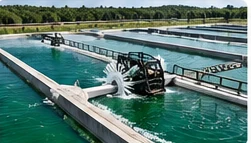
Choose reliable water, electricity, drainage and hygiene access. Raceway ponds are commonly shallow, mixed systems; designs must account for climate, freeboard, mixing, lining and contamination controls.
Obtain an authenticated, contamination-screened food-grade strain from a reputable culture source. Scale gradually from laboratory starter vessels to inoculum tanks before pond transfer.
Use a validated alkaline medium such as a suitably adapted Zarrouk-type formulation. Ingredients can include bicarbonate/carbonate, nitrogen, phosphate, sulfate, magnesium and trace minerals; concentrations require a verified protocol.
Track pH, temperature, light, culture density and mixing. Maintain sanitation, records and regular microscopy; discard suspect cultures instead of attempting to salvage contaminated food batches.
Harvest through validated filtration, hygienic washing where appropriate and controlled drying. Protect pigments and nutrients while meeting microbiological and moisture specifications.
Test identity, pathogens, heavy metals, cyanotoxins where relevant, moisture and other applicable food-safety parameters. Use batch IDs, traceable packaging and approved labelling.
| Parameter | Example only |
|---|---|
| Length | 10 m |
| Width | 3 m |
| Operating depth | 0.20 m |
| Geometric water volume | 6,000 L |
Volume = length × width × water depth × 1,000. This is a geometric example, not an engineered pond specification or recommended universal dimension.
Verified strain ID, culture-medium formulation, clean-water standards, target operating ranges, inoculation and scale-up records, harvesting SOP, contamination response, laboratory release limits, and local permits. Exact media dosages should be set by a qualified cultivation specialist rather than copied from a generic website.
The complete 32-entry nutrition table in the Nutrition section is transcribed from the uploaded CYANO Spirulina Brochure (approximate values per 100 g dry spirulina). Nutrients vary by strain, production conditions and testing methods.
For public-facing nutrition labelling, the appropriate reference is a validated food composition source such as USDA FoodData Central, together with actual accredited laboratory testing and applicable FSSAI rules. FSSAI regulates food categories and claims; it does not approve a single universal nutrient profile for every spirulina batch.
Important: Spirulina is not a reliable source of bioavailable vitamin B12. Avoid treating the brochure's reference data as a certificate of analysis.
View complete nutrition tables ↗


Illustrative concept artwork for education and layout; not photographs of CYANO facilities, NASA/ESA missions, or laboratory-verified results.
Starting references for readers to verify historical, biological, nutritional and cultivation topics. External publications do not endorse CYANO FOODS products.
Company source material: “Spirulina Introduction” (7 pages) and “Spirulina Brochure” (5 pages), supplied by CYANO FOODS INDIA. Promotional claims in source material are not treated as clinical proof or regulatory approvals. Images of shampoo and hair oil remain product concepts.
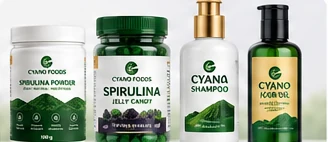
Discover our branded spirulina powder and explore a wider portfolio of algae-inspired food and personal-care ideas.

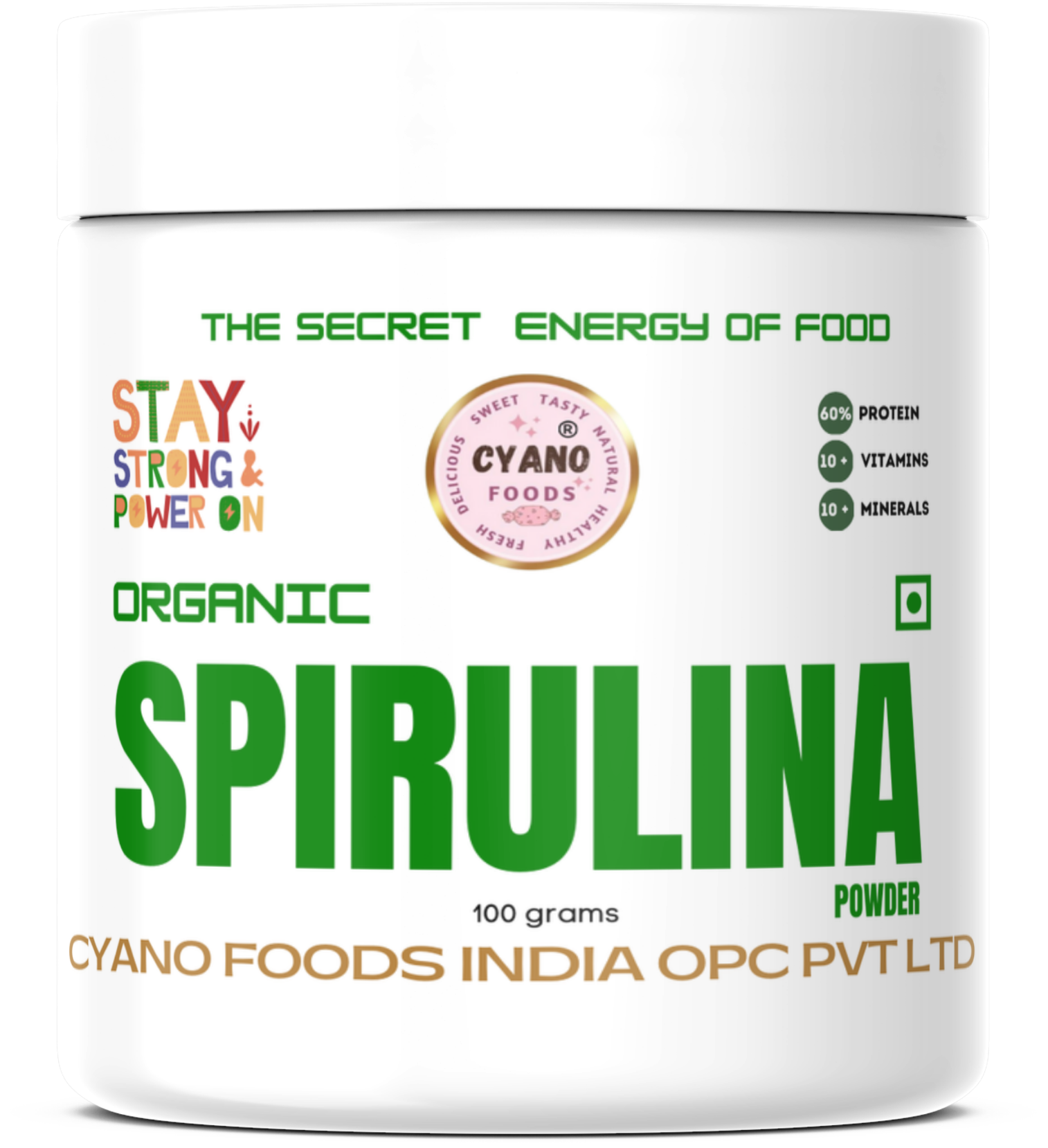
Product packaging supplied by CYANO FOODS. Organic certification and nutritional claims require current supporting documentation.

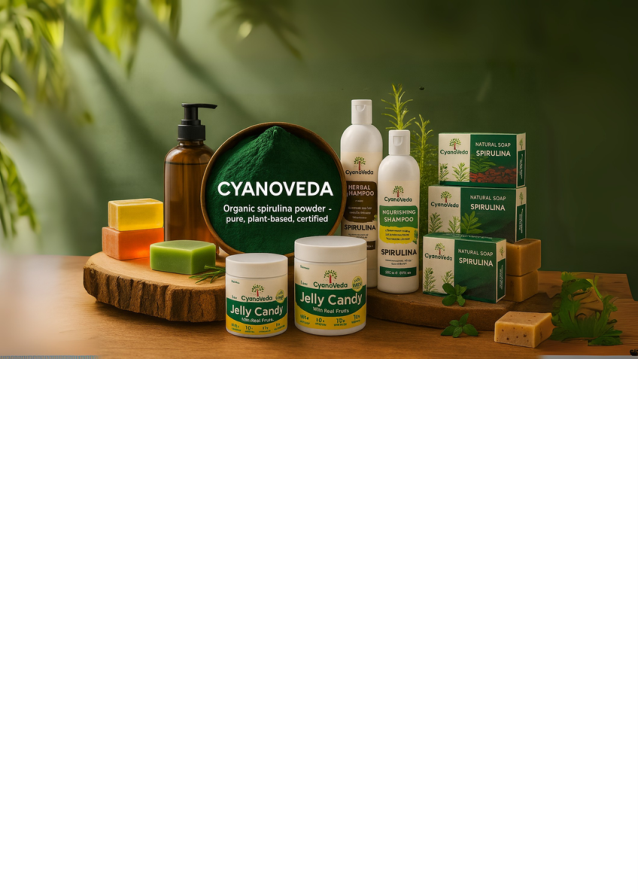
Brochure concept imagery. Shampoo, hair oil, soap and jelly candy availability and final formulations should be confirmed.


Illustrative concept artwork for education and layout; not photographs of CYANO facilities, NASA/ESA missions, or laboratory-verified results.
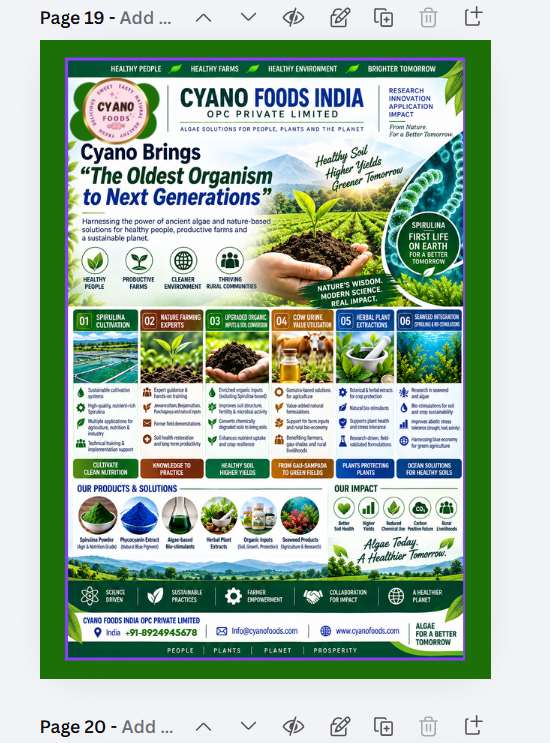
An integrated algae-led approach connecting food, agriculture, research and sustainable livelihoods.
Controlled culture systems, biomass harvesting and quality-focused cultivation practices.
Research-led exploration of algal extracts for plant growth, nutrient use and stress resilience.
Spirulina protein, amino acids, pigments and micronutrients for nutrition innovation.
Circular bio-resource approaches, natural inputs and value-added plant solutions.
Botanical ingredients and spirulina-inspired innovation for personal-care concepts.
Marine and freshwater algae opportunities for sustainable product development.
Spirulina (Arthrospira) is cultivated in managed aquatic systems. Harvested biomass can be processed into dried powder or investigated for specialised extracts.
A structured, comprehensive presentation of the approximate per 100 g dry-weight values published in your CYANO Spirulina Brochure (pages 2, 3 and 5). Values below are brochure-derived, not batch-specific CYANO laboratory results.
| Nutrient / component | Per 100 g (unless stated) |
|---|---|
| Energy | 290 kcal |
| Protein | 57–65 g |
| Total fat | 7–8 g |
| Saturated fat | 2.7 g |
| Monounsaturated fat | 0.7 g |
| Polyunsaturated fat | 2 g |
| Carbohydrates | 23–24 g |
| Dietary fibre | 3.6 g |
| Sugars | < 1 g |
| Nutrient / component | Per 100 g (unless stated) |
|---|---|
| Vitamin A (beta-carotene; brochure expression) | 11,000 IU |
| Vitamin B1 (Thiamine) | 2.38 mg |
| Vitamin B2 (Riboflavin) | 3.67 mg |
| Vitamin B3 (Niacin) | 12.82 mg |
| Vitamin B6 (Pyridoxine) | 0.36 mg |
| Vitamin B12 (not reliable as usable B12) | 0.0–0.2 µg |
| Vitamin C | 10.1 mg |
| Vitamin E | 5 mg |
| Vitamin K1 | 25.5 µg |
| Nutrient / component | Per 100 g (unless stated) |
|---|---|
| Calcium | 120 mg |
| Iron | 28.5 mg |
| Magnesium | 195 mg |
| Phosphorus | 118 mg |
| Potassium | 1,363 mg |
| Sodium | 1,048 mg |
| Zinc | 2 mg |
| Copper | 0.8 mg |
| Manganese | 1.9 mg |
| Selenium | 7.2 µg |
| Nutrient / component | Per 100 g (unless stated) |
|---|---|
| Phycocyanin | Blue pigment–protein complex |
| Gamma-linolenic acid (GLA) | Fatty acid |
| Chlorophyll | Green pigment |
| Polysaccharides | Complex carbohydrates |
The complete nutrient-by-nutrient values from the supplied brochure are now presented above. The brochure does not provide a quantified amino-acid assay, so no CYANO-specific amino-acid composition is asserted.
Approximately 57–65 g protein per 100 g dried spirulina, depending on source and processing.
Selected nutrients include thiamine, riboflavin, iron, magnesium, calcium and potassium.
A blue pigment-protein complex associated with the distinctive colour of spirulina.
Important: Spirulina is not a reliable source of bioavailable vitamin B12. This website does not claim to prevent or treat diseases. Actual retail nutrition labels must be based on tested products and applicable rules.
Published research explores cyanobacteria and microalgae extracts for seed germination, plant growth, nutrient uptake and abiotic stress responses.
Effects depend on crop, extract, concentration and conditions. This section describes research potential, not guaranteed CYANO product performance.
Read scientific review ↗Algal cultivation → extract preparation → formulation testing → crop-specific trials → quality and regulatory review.
Creative packaging mockups for proposed spirulina-ingredient personal-care products. Final formulations, ingredient declarations, claims and regulatory approvals are to be confirmed before commercial launch.
Spirulina-inspired botanical hair cleansing concept with a premium deep-green bottle.
Enquire ↗Nature-inspired hair oil concept with a warm gold and forest-green identity.
Enquire ↗CYANO FOODS INDIA (OPC) PRIVATE LIMITED explores algae solutions across cultivation, food science, natural farming, botanical applications and sustainable innovation.
Our company materials describe farmer education, spirulina cultivation support, nutrition awareness, and proposed expansion into jelly candy, beverages, botanical personal care and e-commerce.
We welcome research, cultivation, manufacturing, distribution and institutional partnership conversations.
Request company details ↗
Contact our team for cultivation, nutrition, agriculture, personal-care and partnership enquiries.